













Our first paper entitled “A qualitative study exploring participants‘ feelings about an online Pilates program designed for people with hypermobility disorders” was published in March 2025. The study into the IMM for hypermobility explored the participants experiences engaging in an online program. Our research highlighted four main themes for the contributors and barriers to exercise for hypermobile patients. This will contribute to the design and formulation of hypermobility exercise guidelines.
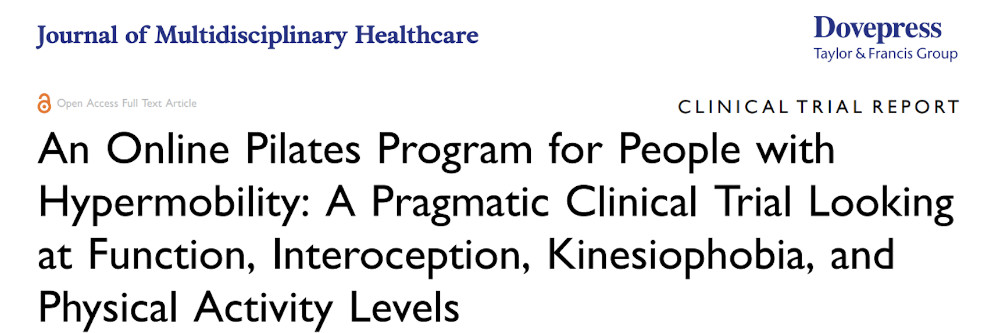
Our second research paper was published on 16 February 2026 and shares the results of our quantitative pragmatic clinic trial of the IMM. The results of the outcome measures were statistically significant and remained so for the post 6 month follow up. The analysis confirmed that 88% of post-intervention respondents were likely or very likely to recommend this program to other people with hypermobility.
The IMM benefits
The Integral Movement Method (IMM) is a no pain, no strain strategy to movement that allows the body to release stress and tension from the body and replace it with a calm nervous system and efficient movement patterns. Pain and discomfort, often stuck in the body for many years, can often disappear. The IMM is endorsed by doctors and physiotherapists and has helped hundreds of people.
A personal journey
My work is personal. I was a chronic pain sufferer, with a hypermobile, bendy and unstable body. I experienced three episodes of pneumonia that left me with a lifelong lung condition called bronchiectasis. My extensive medical history of seemingly unrelated issues finally led me to a diagnosis of Ehlers-Danlos Syndrome and Mast Cell Activation Syndrome (MCAS), Postural Orthostatic Tachycardia Syndrome (POTs) and Chronic Fatigue Syndrome (CFS). This experience led me to develop my own approach to take back control of my health.
Informed by years of training and research
I trained with the internationally recognised leader of rehabilitation-based Pilates, Polestar Pilates. I then explored outside the realm of Pilates and studied other disciplines – attending courses on biomechanics, anatomy, neuroscience and lifestyle medicine. Through self-practice, study and the privilege of working with thousands of my own clients, I developed the Integral Movement Method (IMM).
Making IMM available to all
I’m a firm believer that movement heals. I work privately with clients in my clinic in Wimbledon but I’m committed to sharing IMM with sufferers globally. I want everyone that needs it to have easy, affordable access to my approach. To this end, I launched The Zebra Club platform, the most comprehensive collection of movement solutions for people with hypermobility and EDS which offers effective, affordable and safe programmes.

The Zebra Club
Hypermobility safe, affordable and effective movement, education and community in the comfort of your own home.
The Zebra Club is a programme based on the Integral Movement Method. In this programme I will carefully guide you through safe exercises to manage your pain.
Learn more
Find a practitioner near you
A directory of teachers who have successfully completed the Fundamentals of the Integral Movement Method taught by Jeannie Di Bon in association with The Ehlers Danlos Society.
IMM Directory
My ‘The Integral Movement Method’ book
For health professionals and movement practitioners who want to learn more about this evidence-based approach to hypermobility management. You will learn:
The six hypermobility principles in depth
Strategies to implement in your own clinical practice
Practical solutions for you to use with your clients.
Availabile now!
Using the Integral Movement Method, this book provides movement practitioners and therapists with essential knowledge for working with clients with hypermobility conditions and connective tissue disorders.
Buy the BookWhat Experts Are Saying
A game-changer for hypermobility care. Clear, compassionate, and clinically sound. Di Bon empowers practitioners and patients alike with practical, science-informed strategies that truly make a difference.
Dacre Knight, MD, FACP, Medical Director,
EDS & Hypermobility Disorders Center,
University of Virginia, Associate Professor of Medicine, UVA Health
Jeannie has integrated her clinical experience with the latest research to write an amazingly comprehensive, detailed, and up-to-date guide for patients and physiotherapists navigating the complexity of the altered biomechanics of the hypermobile body.
Alan G. Pocinki,
M.D. Recipient of the Ehlers-Danlos Society’s Lifetime Achievement Award
This dynamic discussion and comprehensive instruction of the IMM offers the reader pivotal guides in understanding and supporting hypermobile patients. Emphasising principles beyond movement modalities alone, this is a must read for all clinicians and individuals wishing to enhance care.
Lorna Ryan,
MA, rNTP., Reg. Clinical Nutritional Therapy & Lifestyle Medicine Practitioner,
Hypermobility & EDS Specialist
Enhanced by her own lived experience, the author has developed an integrated approach which combines attention to breathing, relaxation, proprioception, stability, balance and posture as well as understanding the importance of fascia.
Dr Philip Bull FRCP,
Retired Consultant Rheumatologist
Jeannie DiBon's Integral Movement Method is a breakthrough for anyone with hypermobility. She shows that movement isn't just possible – it's powerful, healing, and life-changing. This is essential guidance for moving with confidence, not fear.
Linda Bluestein,
MD Board-certified Anesthesiologist, Hypermobility Expert, and Host of The Bendy Bodies Podcast
This book is a vital, empowering resource for those with hypermobility. With clarity and compassion, it bridges clinical insight and embodied movement, offering practical strategies for resilience and regulation.
Tina J Wang MD
I have integrated these excellent tools for gentle rehabilitation into my practice, and recommend anyone wanting to help EDS patients do the same.
Fraser Burling, Rheumatologist,
subspecialist in EDS, New Zealand
Frequently Asked Questions
Learn more about the IMM
Using effective training approaches and techniques is key when it comes to EDS and hypermobility. The right approach can help prevent injuries, maintain correct alignment, and improve joint stability. Working on proprioception is key for this population. Importantly, the right type of training will also help prevent deconditioning. Using effective training approaches and techniques is key when it comes to EDS and hypermobility. The right approach can help prevent injuries, maintain correct alignment, and improve joint stability. Working on proprioception is key for this population. Importantly, the right type of training will also help prevent deconditioning.
When it comes to movement and exercise, a common mistake is to jump in with weights and resistance too soon. It is important we work on calming the nervous system, relaxing tight and overworked muscles, and ensure good alignment before we add extra load. Another common mistake is overstretching. It may feel good to stretch those tight areas but overstretching can weaken and destabilise the joints. It is also important to include rest and recovery in any movement programme. Rest is crucial for muscle repair and joint health.
If you are a movement professional, you can access the Fundamentals of The Integral Movement Method course through The Ehlers-Danlos Society EDS ECHO program.
If you want to learn how to practice The IMM you can join The Zebra Club or get moving with Jeannie on her YouTube channel.
