













Collagen and extracellular matrix are present in the connective tissues all over the body, including ligaments, tendons, joint capsules, fascia, skin, nerves, brain, spinal cord, organs, and blood vessels. This means this condition can affect multiple systems in the body.
People can often present with a range of seemingly unrelated health concerns due to the multi-systemic nature of these conditiond. This can lead to delays in diagnosis or misdiagnosis.
The main types of Ehlers-Danlos Syndromes explained
There are 13 identified types of EDS. Hypermobile EDS (hEDS) is the most common form (90% of all cases) and the only one to not have a gene identified (yet).
The second most common type is Classical (cEDS), which is characterized by skin hyperextensibility and generalized joint hypermobility. Another, more well-known, though rare, type is Vascular (vEDS). This is considered the most serious form and is associated with arterial and organ rupture.
The other 10 types are quite rare:
- Classical-like (clEDS)
- Cardiac-valvular (cvEDS)
- Arthrochalasia (aEDS)
- Dermatopraxis (dEDS)
- Kyphoscoliotic (kEDS)
- Brittle Cornea Syndrome (BCS)
- Spondylodysplastic (spEDS)
- Musculocontractural (mcEDS)
- Myopathic (mEDS)
- Periodontal (pEDS)
Symptoms of Hypermobile Ehlers-Danlos Syndromes
Broadly speaking, EDS is characterized by joint hypermobility, tissue fragility, and skin hyperextensibility. hEDS can present with a wide range of symptoms and severity, ranging from asymptomatic joint hypermobility to more widespread systemic implications.
The symptoms can also vary based on age and gender.
Symptoms can affect the whole body and may include (and are not limited to):
- Joint hypermobility
- Dislocations and/or subluxations
- Joint and muscle pain
- Fatigue
- Easy bruising
- Digestive issues
- Dizziness
- Increased heart rate with standing (Postural Orthostatic Tachycardia – POTS) and other forms of dysautonomia
- Headaches and migraine
- TMJ dysfunction and dental issues
- Pelvic issues: pelvic floor dysfunction, urinary incontinence, pelvic organ prolapse
- And more
hEDS often occurs as part of “the trifecta” – many people have not only hEDS but also dysautonomia (such as POTS) and Mast Cell Activation Syndrome (MCAS).

The Zebra Club
Hypermobility safe, affordable and effective movement, education and community in the comfort of your own home.
The Zebra Club is a programme based on the Integral Movement Method. In this programme I will carefully guide you through safe exercises to manage your pain.
Learn moreCauses and Risk Factors of Hypermobile Ehlers-Danlos Syndromes
While hEDS is a connective tissue disorder, there has not been a gene (or more likely genes) identified as being responsible for hEDS to date.
It does have an autosomal dominant pattern of inheritance which means if a parent has hEDS, the child has a 50% chance of inheriting hEDS.
Diagnosing Ehlers-Danlos Syndromes
In 2017 The International Consortium on Ehlers-Danlos Syndrome and related disorders – a panel of EDS experts – came together to create a consensus diagnostic criteria. These criteria were made more stringent than previous criteria in an effort to identify a genetic marker.

To obtain a diagnosis, one must meet all 3 criteria. The first criterion is Generalized Joint Hypermobility, which is based on the Beighton Score and historical indicators of hypermobility.
The second criterion is having 2 or more of the defined 3 categories of features, including feature B, which is a positive family history, and feature C, which assesses the presence of chronic pain (pain that occurs for longer than 3 months) or recurrent joint dislocations.
Finally, criterion 3 included the exclusion of other diagnoses and other connective tissue disorders or types of EDS.
A note about the Beighton Score:
This is used as a screening tool to make an official diagnosis. It does not account for hypermobility in other joints that can often be hypermobile, like the shoulders, neck, jaw, and fingers.
If one does not meet these strict criteria but still has joint hypermobility and many of the same symptoms, they may be diagnosed as having Hypermobility Spectrum Disorder (HSD).
There is debate on whether HSD and hEDS are separate conditions, or rather, both exist on the same spectrum. Research has shown that hEDS and HSD are indistinguishable from hEDS in severity and body-wide symptoms.

Need some help?
Hi, I’m Jeannie. If you would like to email me directly, click on the contact button and fill out the contact form.
Contact UsManagement and treatment strategies for EDS
While there is no cure for hEDS/HSD, there are so many strategies that can help, many of which are incorporated into The Zebra Club. A multidisciplinary team can be helpful due to the complex nature of this condition.
This team might include hypermobility specialists in rheumatology, neurology, gastroenterology, physiotherapy, movement therapy, occupational therapy, and psychology.
EDS Management strategies can include:
- Address co-occurring conditions (like MCAS and POTS)
- Address pain and possible sensitization
- Learn effective breathing patterns
- Learn to release muscle tension
- Learn movement strategies to support your hypermobile body to stabilize joints and improve proprioception
- Psychological support can be helpful in managing anxiety and stress.
- Education and support groups
- The Zebra Club offers education through our monthly live events with experts, all saved in our resources section. Plus, we have a thriving community with a wealth of collective knowledge. It is important to know you are not alone.
Living with Ehlers-Danlos Syndromes, tips and advice
Here are some of my top tips for thriving with Ehlers-Danlos Syndrome:
- Learning to listen to your body – no pushing through pain or discomfort.
- Build an effective and positive support network like The Zebra Club Community
- Learn to plan ahead if you have activities coming up. Prioritise rest and breaks – rest proactively. Pacing is a great skill to learn.
- Gentle exercise if you’re just starting. Exercise needs to be modified for symptomatic hypermobility. You can find out more about this on my YouTube channel and The Zebra Club
More advice from The Zebra Club Community
“My advice for living with EDS is this: pacing is important, plan ahead if possible. Putting a flare toolkit together from whatever works for the individual: this can include anything from braces to music. Self-care and being kind to ourselves are also important. Bringing in movement and meditation, and keeping the body moving, has been key. Last, asking for help – we may find this difficult.”
-Ian, TZC Member
“My top 5 pieces of advice for living with EDS include 1) Putting together a good provider care team, and 2) Putting together your personalized toolbox of symptom management tools, both pharmaceutical and nonpharmaceutical. 3) Find community in person or online. 4) Keep learning more about your condition. 5) Be your own advocate and don’t give up!”
-Bethany, TZC Ambassador
References
- Anatomy, Connective Tissue https://www.ncbi.nlm.nih.gov/books/NBK538534/
- Malfait et al. (2017) The 2017 International Classification of the Ehlers-Danlos Syndromes. American Journal of Medical Genetics Part C (Seminars in Medical Genetics)
- EDS Types (https://www.ehlers-danlos.com/eds-types/)
- Tinkle et al. (2017) Hypermobile Ehlers–Danlos syndrome (a.k.a. Ehlers–Danlos syndrome Type III and Ehlers–Danlos syndrome hypermobility type): Clinical description and natural history. American Journal of Medical Genetics Part C (Seminars in Medical Genetics)
- Aubry-Rozier et al. (2021). Are patients with hypermobile Ehlers-Danlos syndrome or hypermobility spectrum disorder so different? Rheumatology International PMID: 34398260
What clients say

I look forward to my sessions with Jeannie because she really listens and she totally ‘gets it’. She’s such a warm, compassionate person and very knowledgeable about hypermobility. Jeannie has a way of working with her clients- looking at how you move and the body as a whole to find out what’s happening. I have Hypermobility Spectrum Disorder and since seeing Jeannie my posture has changed, my pain has reduced and the way I use my body is just different. If you are undecided about booking an appointment with Jeannie I would say definitely, do it, it’s an investment that you and your body deserve.

Newly diagnosed, it was so refreshing to find a professional movement teacher, with full empathy, and a most impressive wealth of experience. Within the first two sessions, my typical tension and bracing eased markedly, facilitated largely through my first encounter with Reformer Pilates. Then, seeing The Zebra Club app launched and grow over recent years, gives myself and the other members, a real sense of support, validation, and hope, that we can finally use safe and targeted movement practices, to substantially improve our symptoms and quality of life.

Jeannie’s program offered me a pain-free alternative complete with her astute assessment skills and her unwavering empathy. After sessions with Jeannie, I felt like my body had received a healing balm. I was able to practice her exercises without causing a flare-up or causing additional pain. It was like nothing I had ever experienced before. Most importantly, Jeannie’s program gave me hope. Today, because of Jeanie’s program, I have moved into trying so many activities that I would not have previously been able to do.

Working with Jeannie has enabled me to overcome many years of chronic pain and frustration. Her mentorship has been invaluable, and I am so grateful to have movement solutions for pain and fatigue instead of relying on medications or trying to ignore it and power through. The Zebra Club community is also hugely supportive and helpful for tips and tricks for dealing with hypermobility. I'm so thankful for Jeannie and The Zebra Club and highly recommend it to anyone dealing with hypermobility and chronic pain.

From age 11, I have had chronic pain and frequent subluxations. Diagnosed with HSD at 17, every type of therapy I was sent to only made things worse. Discovering Jeannie and working with her has been an absolute game changer. Jeannie's intimate understanding of the EDS body from her wealth of personal and professional experience is very unique. Her x-ray-like vision in detecting and correcting dysfunctional body mechanics is incredible. I have learned how to walk without pain, naturally not lock my hypermobile joints, and activate muscles I didn't know I had. When I first started with Jeannie, I was housebound, but now I am able to attend college full time and work part time.
I have worked with Jeannie Di-Bon face to face for a number of years. Her approach offered me hope and progress where others had failed and has allowed me to recapture confidence and function in my life. Whilst I continue to be a work in progress her expertise has allowed me to find hope for the future where it has historically been lacking.

Discovering Jeannie was a game changer for me. Having struggled with varied physical health problems since my childhood I went on a self-diagnosis journey after I had a problematic pregnancy and birth with my first child - which compounded all my existing health issues. Jeannie has offered patience, guidance and a wealth of knowledge which have helped me to accept, understand and work with my body. Re-educating my nervous system with Jeannie’s guidance has been a slow and gentle process. I feel now I have the tools to take my pain management and future health into my own hands as I understand how my “different” body works and why my body has reacted in certain ways in the past.
Some related services that have also helped our clients with EDS
Managing your pain starts with learning with what is the right approach for you. Discover a range of services that can help you manage Hypermobility & EDS.
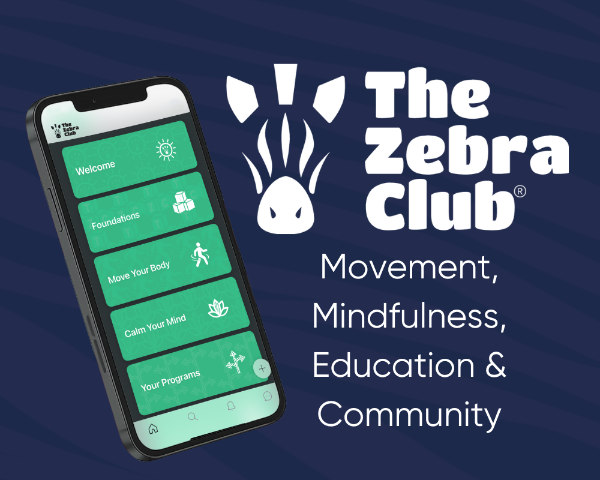
The Zebra Club platform
Begin your journey to safe, healthy, hypermobility friendly movement with our app today.
Join the platform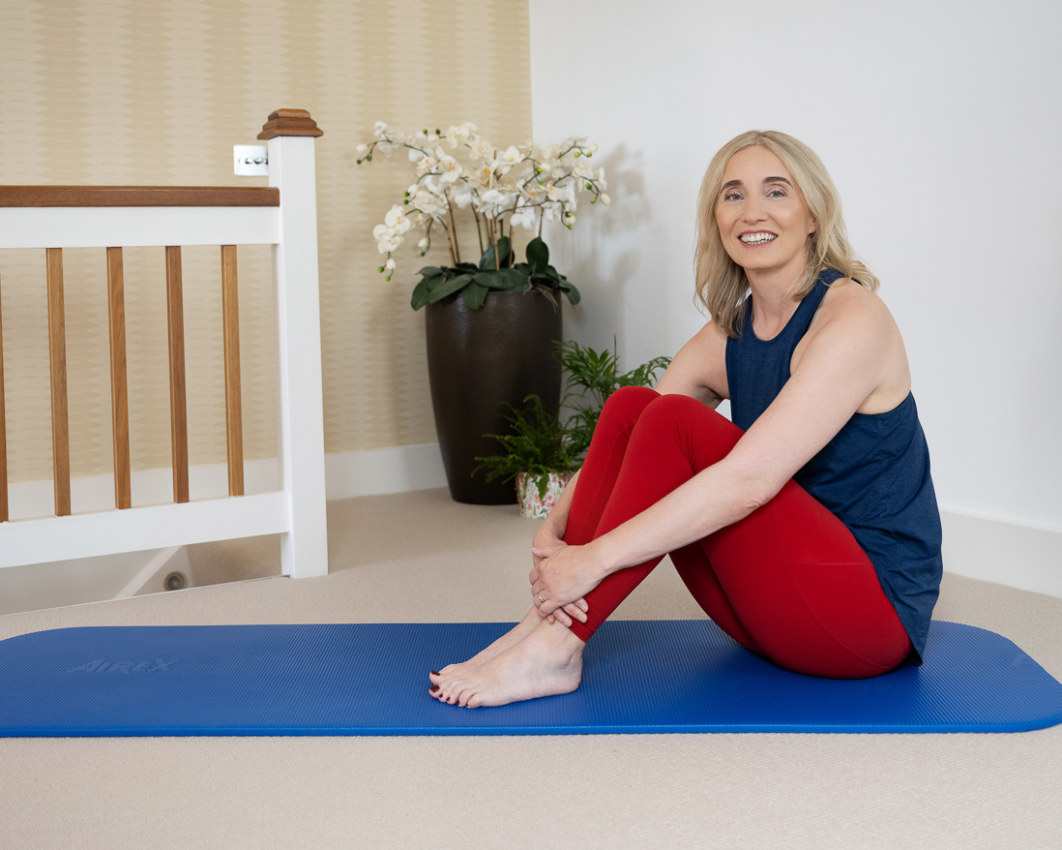
Strengthen your Hypermobile Core
On this course, I demonstrate and explain every exercise, including 'watch for' points in the hypermobile body. You can work from the comfort of your home, at your pace.
View courseFrequently Asked Questions
Learn more about EDS & Hypermobility
EDS can be mistaken for several other conditions due to its wide-ranging symptoms. Fibromyalgia causes chronic pain and fatigue which is a common misdiagnosis. Myalgic Encephalomyelitis/Chronic Fatigue Syndrome with severe fatigue and generalized pain could also mask an underlying EDS diagnosis. Other connective tissue disorders should also be ruled out like Marfan Syndrome, Loeys-Deitz Syndrome and Osteogenesis Imperfecta. Lupus and other autoimmune disorders can present with joint pain leading to potential misdiagnosis.
It is often recommended that people with EDS avoid or modify activities to prevent injuries and manage their symptoms. The limitations will depend on the severity of the condition in each individual and depends on the type of EDS you have. In general, however, it is recommended that high-impact sports be approached carefully to avoid dislocations, sprains, and tears. Care should be taken with stretching as prolonged static stretching can exacerbate joint instability.
The impact of EDS exists on a spectrum and varies from person to person and can be disabling for some.
Currently, the difference between hEDS and HSD is based on the 2017 EDS diagnostic criteria. These criteria were developed to be more specific with the goal of finding genetic variants responsible for hEDS. Not meeting the hEDS diagnostic criteria and being classified as HSD does not mean your symptoms are less severe or real.
