
Estimated reading time: 10 minutesIf you have hEDS or hypermobility spectrum disorder, you have probably tried to exercise and ended up more injured, more exhausted, or more in pain than when you started.
This is not a fitness problem or a lack of willpower. Mainstream exercise advice was just not designed for hypermobile bodies, and may even make things worse.
I know because I went through this cycle for many years until I modified and adapted my exercise and movement programmes to suit my hypermobility.
This, and working as a movement therapist for hypermobile clients, ultimately led me to develop the Integral Movement Method (IMM) for hypermobility.
I discovered that hypermobile bodies require a different approach to movement. Traditional approaches were not designed with EDS and HSD in mind.
These ten movement patterns are ones I see again and again in my clients with hEDS and HSD, and each one has a gentler, safer fix that works with your body rather than against it.
Key Takeaways
- Muscle tightness in hEDS and HSD is often protective tension, not a sign that muscles need to be stretched out. Aggressive stretching can increase pain rather than relieve it.
- Locking joints for stability creates false stability, relying on ligaments rather than muscles. A locked joint is not a stable joint.
- Pacing, breath work, and nervous system calming come before strength work in the Integral Movement Method.
- The Zebra Club is a guided movement platform where you can follow the IMM safely, step by step, at your own pace.
Updated May 2026
1. Why does stretching often increase pain in hypermobility
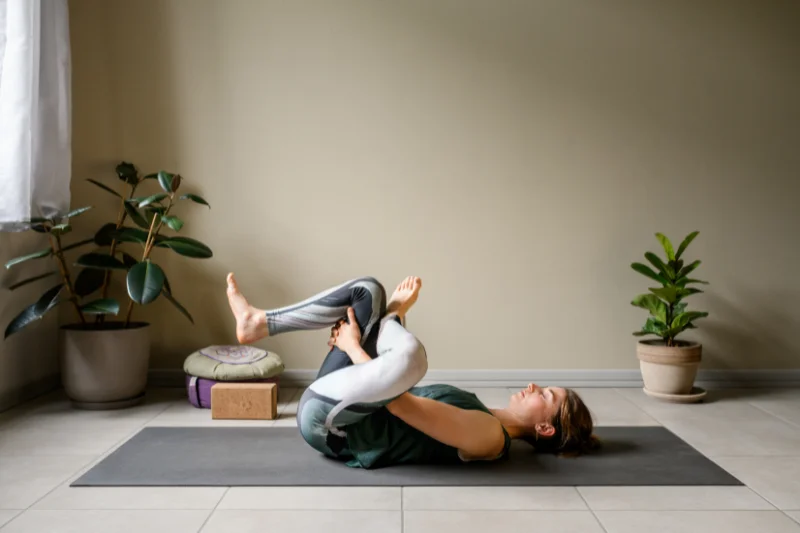
Tightness in hypermobility is often the body’s protective response, not a sign that muscles need to be stretched out. When joints are lax, muscles tighten up to try to stabilise, and those tight muscles are doing an important job, often compensating for deep stabilising muscles that are not yet firing correctly.
Stretching them can remove that stability and increase tension rather than relieve it, and stretching harder can signal to the fascia to tighten up more, creating a cycle of pain and tension.
It might feel really good at the time, but the body often responds with increased tension later that day or the next morning.
Fix: I am a huge fan of gentle dynamic stretching and breathwork to relieve tightness. Calming the nervous system is key to relieving tension.
We could also try some gentle myofascial release techniques to help relieve tightness rather than stretching it out.
2. Why do hypermobile joints feel more stable when locked?
Locking a joint feels stable, but it is actually one of the most common movement patterns that works against us in hypermobility.
A locked joint is not a stable joint. It is a joint hanging at the end of range, relying on ligaments rather than muscles for support. In reality, we are actually quite vulnerable and weak in this position.
You might notice this as straightening your knees completely when standing, your elbows bending backwards when you carry something, or your joints snapping into a position that feels secure but leaves the surrounding muscles switched off.
I call this “false stability,” and it is something I was very guilty of myself.
Fix: It is really important to practice softening our joints and feeling the sensation of a soft joint.
This may mean a gentle microbend of the knees when standing still. Notice how you lift things or bear weight. Are your elbows locked out?
Noticing this and gently changing it can change the pattern. When we lock joints, the muscles can’t work to support the joint, so it is an important repatterning that can be really beneficial.
3. Is bracing the core safe for hypermobility?
Constantly bracing the core is not functional, and it is not how the body works in reality.
Many people with hypermobility either struggle to find a stable centre or overcorrect by holding tension constantly, and neither serves the body well.
Traditional core stability approaches, including some Pilates methods, have encouraged this kind of rigid engagement, but research has raised doubts about whether constantly tensing the trunk muscles actually strengthens anything at all.
Over-bracing can lead to greater pain around the hips, pelvis, and lower back, inhibit healthy breathing patterns, and fatigue the body.
Fix: We want to encourage the engagement of muscles in a natural way that responds to the load we are putting through the body.
The pelvic floor is a dynamic group of muscles that respond to breath and load. Ideally, we want to teach it to respond to the breath accordingly, rather than being held in a constant contraction.
4. How do sitting positions affect hypermobile joints?
Sitting in extreme positions, such as W-sitting, wrapping the legs around each other, or slumping into end-of-range positions, is extremely common in hypermobility.
Because proprioception is often affected in hEDS and HSD, the body seeks compression and end-of-range positions to get a stronger sense of where it is in space.
These positions can feel comfortable and stabilising for this reason, but they can put stress on already lax joints over time and may contribute to pain and instability.
Many people also adopt them as a form of natural compression for the blood pooling that occurs with POTS.
Fix: Initially, we need to be mindful of our seated positions.
Notice when you sit cross-legged and try to sit in a more balanced position with both feet on the floor in parallel. The pelvis will be much happier in the long run.
The most important thing is to keep moving regularly. Get up and move around or do seated movements.
If you do find you need to sit in these compressed positions, try and alternate sides and positions regularly to prevent compensation patterns in the fascia.
You can use cushions, supports, and props to help support the spine and neck. You can try wearing compression for POTS and dysautonomia.
5. Why I don’t believe in “No pain, No gain” with hypermobility
In our society, we have been taught that pushing harder, going further, and working through discomfort is how we make progress.
When you are dealing with hypermobility, hEDS, or HSD alongside energy-limiting conditions, this approach does not work and can set you back significantly.
Pain and fatigue are not obstacles to push through; they are important signals from the body that it is under too much stress and strain. I am a huge advocate of a “No Pain, No Strain” approach, and I discourage my clients from pushing through pain or fatigue.
It is tempting to try to push through, but it often leads to flares and injuries. If you are dealing with a condition like ME/CFS, this could also trigger Post Exertional Malaise (PEM).
Learning to listen to the body signals and taking constructive rest days is super important. Some muscle soreness is to be expected, but this is different from big increases in pain and fatigue.
Fix: To avoid this, learning to pace is key. This can include being flexible with your movement practice, as we tend to feel different day to day.
You can also try building in planned rest days – these are essential too.
Sustainable progress comes from little and often, and we want to avoid the boom and bust cycle.
6. Why does lifting feel different when you have hEDS or HSD?
Everyday tasks like lifting, carrying, and reaching are common sources of strain in hEDS and HSD, and this is largely because hypermobility affects proprioception, our sense of where our joints are in space.
When we cannot feel precisely where a joint is, we compensate without realising it.
It is easy to hyperextend the elbows when lifting or carrying, which causes the shoulder to rise up towards the ears, and without awareness of alignment and muscle engagement, these small compensations can accumulate into pain and flares.
Fix: To fix this, working on learning alignment and improving proprioception is important.
Try to share the load between both sides of the body and avoid overstretching to reach something.
Supportive braces and splints can help us learn proprioceptively where our bodies should be in space. Our proprioception can also be improved through gentle, controlled exercises.
Remember, the further away from the body the load is, the harder it is going to be to manage. Keep things close and reduce the strain.
7. Why do the wrong muscles overwork in hypermobility?
When the deep stabilising muscles are not working effectively, the body compensates by overusing the bigger global muscles, such as the quads and upper trapezius. One common example of this is what is sometimes described as “sleepy glutes,” where the gluteal muscles fail to activate properly and other muscles pick up the slack instead. Global muscles fatigue more quickly than deep stabilisers, and a fatigued muscle will always let you down eventually. This creates a cycle of imbalance, tension, tightness, and pain that is extremely common in hypermobility.
Fix: To fix this, we need to learn how to activate and recruit our deep stabilizing muscles.
In the IMM, I focus on slow, gentle, mindful movements to retrain the muscle recruitment patterns.
We wake up the deep stabilisers and quieten down the global muscles. We start to bring balance to the whole structure, and that ultimately leads to less pain.
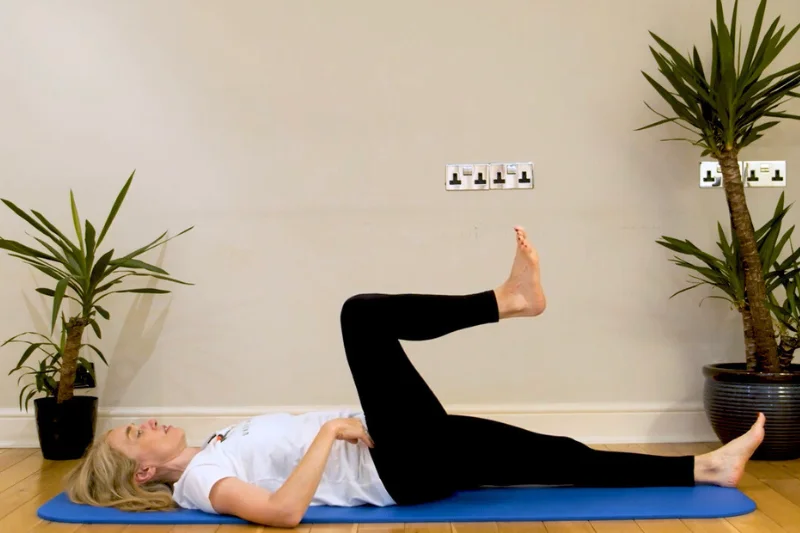
Jeannie demonstrates a move in the Non-Weight Bearing Part 2 Class in the Stability section of The Zebra Club platform.
8. Why does fascia help matter for people with hEDS & HSD?
Fascia is our connective tissue network that supports and links everything in the body. With a lack of movement, fascia can become tight and dehydrated, leaving us feeling stiff, painful, and sluggish.
Fascia-friendly mindful movement is one of the most effective ways to start feeling better, and it is often where I begin with clients before we move into any strengthening work.
Fix: We want to keep the fascia healthy with gentle, varied movements that keep it hydrated. Fascia doesn’t like to be pushed or forced.
It responds to gentle pressure and mindful movements. Fascia also plays a huge role in our proprioception, as it is our biggest sensory organ.
Working on the fascia can help with proprioception, too. Members of The Zebra Club platform report lots of pain relief simply from starting to do this kind of movement before they even begin strengthening.
9. Why rushing into strength training doesn’t work with hypermobility?
Strength training is important and beneficial for people with hEDS and HSD, because strong muscles help to support lax joints. But the way in which strength work is approached is key.
Jumping straight into resistance or loaded work can be quite detrimental for a hypermobile body.
After working with thousands of hypermobile clients, I have found that we need preparation first: calming the nervous system, developing awareness of alignment and control, and building some degree of stability before we load the system more.
We must feel safe before we build strength.
Fix: I address this in the IMM. We begin with breath and relaxation to calm the nervous system and establish control and body awareness.
Then we layer stability and strength in gradually – there is no rush. We start low and go slow. We want true stability before we add in load.

10. How Does Breathing Affect Movement in hEDS and HSD?
Breath is the first element of the Integral Movement Method, and there is a very good reason for that.
Many people with EDS and HSD have breathing pattern disorders of some kind, and holding the breath or breathing shallowly during movement increases tension and stress in the body.
Our bodies are already stressed and tense, and we want to start removing that tension before we exercise, not adding to it.
I have spent a lot of time researching and exploring the breath and facilitating movement that integrates with the breath to make movement easier and more fluid.
Fix: Spend time observing the breath first, noticing how you breathe without judgment.
Start to gently coordinate the breath with movement, but in a natural way. Breathing well can make movement smoother, safer, and more efficient. I am very intentional about how I teach and cue breathing in all of my movement classes.
Tension can ease away, allowing full expansion of the torso. I did a video on this recently on YouTube about whole body breathing that may help.
Building Safer Movement Habits with Hypermobility
If you live with hypermobility, movement doesn’t have to be a cycle of injury and frustration. Although I totally understand how it can get that way. I have been there, with constant pain and injuries whenever I tried to exercise.
These ten challenges are common. I have experienced many of them myself over the years and seen them in my own clients’ exercise histories.
But they are not your fault – most of us have never been taught how to move in ways that support our hypermobile bodies.
Traditional movement methods and rehab have been applied to EDS bodies, and sadly, this does not always suit us. We did a research study on my modified approach to Pilates and have published both a qualitative and quantitative analysis.
My hope is that this research highlights that when movement is modified specifically for EDS and hypermobility, it can work, and that this will inform exercise guidelines going forward (there are currently none available).
Stability isn’t built overnight – but by taking those small, consistent steps.
Awareness is where change begins. When we notice what we are doing, whether that is locking our elbows, pushing through pain, or rushing into exercise, we can start to do something different.
These habits are not your fault. Most of us have never been taught how to move in ways that support a hypermobile body, and traditional movement methods were simply not designed with EDS or HSD in mind.
The good news is that we can build safer movement habits, and over time, if we continue to drip-feed the nervous system little and often, these habits become second nature.
Movement is medicine, but only when it suits your body. With a condition like hEDS or HSD, modifications are not optional extras; they are the whole point. Stability is not built overnight, but every small, consistent step counts.
If you’d like to explore safe, guided movement designed for hypermobility, join me in The Zebra Club. You’ll find step-by-step classes to support you.
Video: Gentle 20 Minute Flow
If you are scared of movement or have had bad experiences with exercise and hypermobility, this is a great place to start. This 20-minute hypermobility & EDS flow class is perfect for all levels and abilities. No equipment is required.
FAQ
What exercises should be avoided with hypermobility?
People with hypermobility should avoid uncontrolled end-range movements, aggressive stretching like unmodified yoga stretches and pilates, and high-impact exercise without proper preparation. These can increase instability. While there are no “banned activities”, I don’t recommend anything that increases or brings on new pain.
How do I protect my joints if I’m hypermobile?
Protecting joints with hypermobility means keeping a micro-bend (not locking out), moving slowly and with control, and strengthening stabilising muscles. Supports or braces can also help during higher-demand activities.
Why do I get injured so easily with EDS/hypermobility?
EDS and hypermobility can cause fragile connective tissue and increased inflammation, which makes injuries more likely. Building tissue tolerance gradually and respecting your body’s baseline is key to reducing risk.
How can I tell if I’m moving safely with hypermobility?
Safe movement should feel supported, controlled, and free of strain. If you find yourself holding your breath, relying on momentum, or locking joints, the movement likely needs adjusting.
Why do I feel stable only when I lock my joints?
Locking joints creates “false stability” by relying on ligaments instead of muscles. True joint stability comes from retraining muscles to support movement without overloading connective tissue.
Can people with hypermobility build strength safely?
Absolutely, people with hypermobility can safely build strength through slow, low-load, controlled exercises. The key is gradual progression and preparing the body before increasing intensity.
Is stretching a good warm-up for hypermobility exercise?
Gentle dynamic movement is a better warm-up than static stretching for hEDS and HSD. Static stretching before exercise can remove the protective tension the body relies on for stability, leaving joints more vulnerable rather than more prepared.
What is the best exercise for double-jointed people?
Being double-jointed, or hypermobile, means stability-focused movement works better than flexibility training. Slow, controlled exercises that build deep muscle support around joints are safer and more effective for people with hEDS or HSD than stretching or high-impact activities.
Why do my muscles fatigue so quickly with hypermobility?
In hEDS and HSD, global muscles such as the quads and upper trapezius often overwork to compensate for underactive deep stabilisers. These larger muscles fatigue quickly because they were not designed for sustained support work.
Is yoga safe with EDS?
Standard yoga classes are not designed with hypermobile joints in mind and may increase instability if they include passive or end-range stretching. Modifications are essential. Working with a practitioner experienced in hEDS is recommended.

Jeannie Di Bon is a movement therapist, educator and author specializing in hypermobility, Ehlers-Danlos Syndrome and chronic pain. She is the founder of The Zebra Club app and the creator of the Integral Movement Method.

4 Comments
Nina Manning - 13th July 2026
I love this website as someone who has HSD and is a yoga teacher and a Feldenkrais practitioner in training. I would love to see some research on the links between Symphosis Pubis Dysfunction and HSD. I suffered through both pregnancies and I think there is a link but no research I can find. Also I don’t feel I ever recovered over 20 years later
Jeannie Di Bon - 17th July 2026
Thank you for sharing. Yes this can be common in pregnancy. We need to adapt movements and exercises to accommodate for this.
Laura (Laurie) Dumas - 16th September 2025
I think you have a winning concept here. I am an avid serious amateur ballroom dancer and have been on and off since I was 22 (I’m 67 now). I now have not only joint hypermobility syndrome (diagnosed) and presumptive Ehlers Danlos. Plus foot peripheral neuropathy. I am trying very hard to lessen those issues so I can resume ballroom dancing at any level possible. I have been first in chiropratic care for almost 10 years and then after that have had EXTENSIVE craniosaral physical therapy. I have studied Dr. John Upledger’s craniosacral therapy while getting treatment. I already do much of what you show here and strongly support it and am very glad you offer this to so many people. I lived in London, England to learn how to dance for 3 years in the mid 80’s. I found Classical Stretch/Essenctrics on our public broadcast stations (PBS) from former ballet dancer in Canada who has extensively studied the body (fascia and more) and I now use her DVDs and exercises that she suggests for those with neck and back pain (she herself has had many issues with pain so for her own good and others). My husband of 20 years died of pancreatic cancer after almost 3 years of suffering and chemo. I am having to downsize/pare down/pack and move all on my own. I have to do a lot of physical movement/activity I would like to not do and usually don’t and am now in considerable pain. I have no choice. I would love to have the money for your program but I don’t know how I am going to handle the finances I am facing. I will keep your information if that should change. Reach out to Miranda Esmonde-White…you have much in common. I don’t think she has EDS but she knows and understands pain. She has written two books, one on aging and one on pain (I know where the aging book is but right now in the chaos of moving I am still looking for the pain one). I have an apt this afternoon and will be in a position I HAVE to do physical activity I shouldnt be doing but…. I am on a strict deadline that I don’t see how I am going to meet. I just finished my 1 hr. soaking therapeutic 4 jet tub bath, 1 hour of using prescription compounded cream on my feet and menthol type OTC creams on my knees and shoulders and Aspercreme on shoulders and arms. I also have “chronic intractable fialed pain syndrome complicated by a migraine disorder” diagnosis by Johns Hopkkins and I use the Aspercreme for the cervical radiculopathy arm pain. I have oosteoporosis and fell fracturing both wrists and sustaining a R rotator cuff injury. I use the bath to exercise my wrists/hands to gain as much function as possible. Do you have access to AI on your computer? I use mine extensively and gain much insight about everything that I think someone like you could benefit from. Sorry I went on so long…I am also a highly sensitive person and am a INFJ (Myers-Briggs test anyone can access on line and take the test to see where you fall). I sense you probably are on the sensitive side yourself. Have a great life and good luck with this endeavor!
Jeannie Di Bon - 24th September 2025
Thank you for sharing your experience with us. I do have free resources on my YouTube channel too that you may like to view – it is called the Hypermobility Channel.