
Estimated reading time: 7 minutesThe Integral Movement Method grew from two things: clinical evidence and my own lived experience with hEDS.
I was delighted to be interviewed by Dr. Ellie van Setten for VED Magazine, the publication of the Dutch Ehlers-Danlos patient association. We explored the origins of the IMM, the principles that underpin it, and why movement can be such a powerful tool for people living with hEDS and HSD.
Drawing on my professional experience and my own diagnosis, I share how the IMM evolved into a whole-person approach that goes far beyond exercise alone.
We were kindly given permission to share the full article here. I hope you enjoy it.
This interview was originally published in VED Magazine, the publication of the Dutch Ehlers-Danlos patient association De Vereniging van Ehlers-Danlos patiënten (VED). It is reproduced here with kind permission. The interview was conducted and written by Dr. Ellie van Setten
Key Takeaways
- The Integral Movement Method (IMM) starts with nervous system regulation, not strength — breath and relaxation come before movement.
- Two peer-reviewed studies found the IMM improves both physical function and psychological wellbeing in people with hEDS and HSD.
- “Go low and go slow” — slow, small movements recruit the deep stabilising muscles that hypermobile joints need.
- Jeannie Di Bon developed the IMM from both clinical expertise and her own lived experience with hEDS.
- People can access the IMM through the Zebra Club platform, the IMM practitioner directory, or the EDS Society’s ECHO programme.
The Integral Movement Method: Jeannie Di Bon in conversation with VED Magazine
For many people living with a form of the Ehlers-Danlos Syndromes (EDS) or Hypermobility Spectrum Disorder (HSD), movement can feel confusing, frustrating or even frightening.
Yet for Jeannie Di Bon, movement is also the key to improving quality of life for people with hypermobility. As a clinician and as someone living with hypermobile EDS, she created the Integral Movement Method (IMM), drawing on science, lived experience and years of professional practice.
The IMM consists of six connected components that build on each other: Breath, Relaxation, Proprioception, Stability, Balance, and Posture. In her recent book, The Integral Movement Method for Hypermobility Management, Jeannie describes each of these components from a scientific perspective and offers illustrated exercises that patients can do to reduce symptoms caused by hypermobility.
The book also includes a chapter on heritable connective tissue disorders by Dr. Alan Hakim and a chapter on pain mechanisms by Dr. Leslie Russek. Although the book is primarily aimed at professionals, it is also valuable for patients who would like to deepen their understanding of the topic and try the exercises themselves.
You got diagnosed quite late relative to when you started working with patients with hypermobility. Did you already suspect back then that you were hypermobile yourself?
No. I had experienced symptoms since I was about 12 or 13 — heart issues, lung problems, headaches, migraines, joint pain, and digestive difficulties. I assumed these issues were normal.
After my second son was born, I saw a physiotherapist because I had severe pain in my left shoulder and had even lost sensation in my left arm. He suggested I try something like Pilates. He said: “you’ve got no stability; you’re hanging off your joints.” At the time, I did not understand what he meant, and hypermobility — let alone EDS — was never mentioned.
I qualified as a Pilates instructor in 2008 and initially worked with the general population. Later, a physiotherapist who specialised in hypermobility began referring patients with EDS to me. I became increasingly interested and started researching the condition.
The more I worked with these patients, the more similarities I recognised in myself. However, I did not actively seek a diagnosis. It was only in 2017, after my mother passed away, that I was diagnosed at the age of 48. The trauma triggered several health issues, which were later identified as Mast Cell Activation Syndrome (MCAS).
The clinician I consulted asked whether I had heard of EDS. Of course I had, and I was eventually diagnosed. It was an enormous relief. I remember crying because, suddenly, everything made sense. Unfortunately, my experience is not unique. EDS is still too often diagnosed by chance, which shouldn’t be the case.
How did you develop the IMM?
It all started with Pilates. But over time, both with clients and myself, there were certain things that did not feel right, or actually made symptoms worse. For example, bracing the core and holding your breath while still trying to move can create problems if you’re hypermobile.
So I researched a lot. I became increasingly interested in neuroscience and biomechanics and completed a Master’s degree in Pain Management. A fairly new concept that is part of the IMM is biotensegrity, which views the body as one interconnected system rather than a collection of separate joints.
When you move one part of the body, it affects the rest as well. Instead of focusing on one joint at a time, we work toward dynamic stability throughout the whole body. While Pilates is still at the heart of my method, the IMM now contains a lot more ingredients.
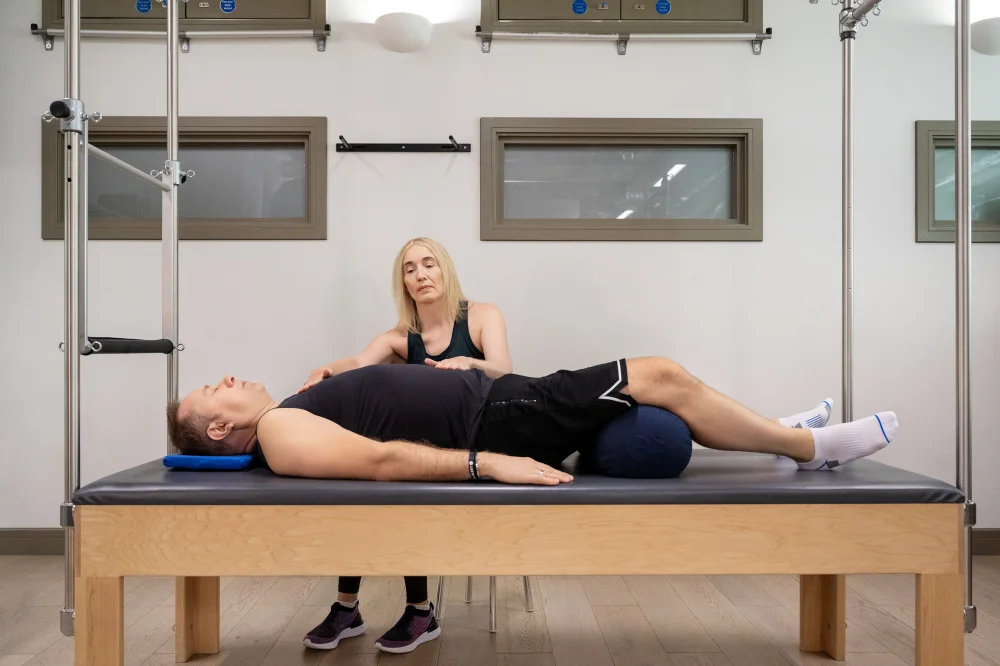
Why are breath and relaxation so important for movement?
Because of nervous system regulation. Traditionally, people with hEDS and HSD were just told: “go and do some exercise, get stronger!” However, we are so much more than our physical bodies.
People with hypermobility tend to be hypersensitive or anxious, and autism and ADHD are much more common among people with hEDS or HSD. If you are holding your breath because you are scared, or you tense your muscles because you had bad experiences with movement in the past, then simple weight training will not work and may do more harm than good.
Sometimes therapists blame patients when exercises do not have the desired effect. What we really need is a shift in approach — meeting people where they need to be met.
It is also important to progress slowly with the exercises. You want the exercises to feel safe and stay in a calm nervous system state. My motto is: “Go low and go slow.” Slow movement requires greater control. If you move quickly, you can compensate with larger muscles, but you will not build real stability. When you move slowly, you need to use your deep stabilising muscles. This means that as a therapist you sometimes have to slow people down, instead of encouraging them to push through.
Has there been scientific research about the IMM?
Yes. Together with Dr. Leslie Russek and Dr. Jane Simmonds, I did both a quantitative and qualitative study about the IMM delivered through an eight-week online course.
One of the outcomes was that people did experience physical improvements, but they experienced psychological improvements as well, which was incredibly encouraging. They had less anxiety and they felt more relaxed.
Another finding was that fatigue was often very limiting for participants, not just pain. We have taken that into account in the continued development of the Zebra Club platform.
At the moment, we are doing a larger study about the IMM together with the University of Illinois. In this study, we monitor the effects of the IMM through the Zebra Club platform over the course of a year.
If people want to start with the IMM, where should they go?
Practitioners can train with me live in London or online through the Ehlers-Danlos Society’s ECHO education programme. Patients can join via the Zebra Club platform or look for a practitioner in the IMM directory on my website. This directory contains a growing global network of trained professionals.
What are you working on at the moment?
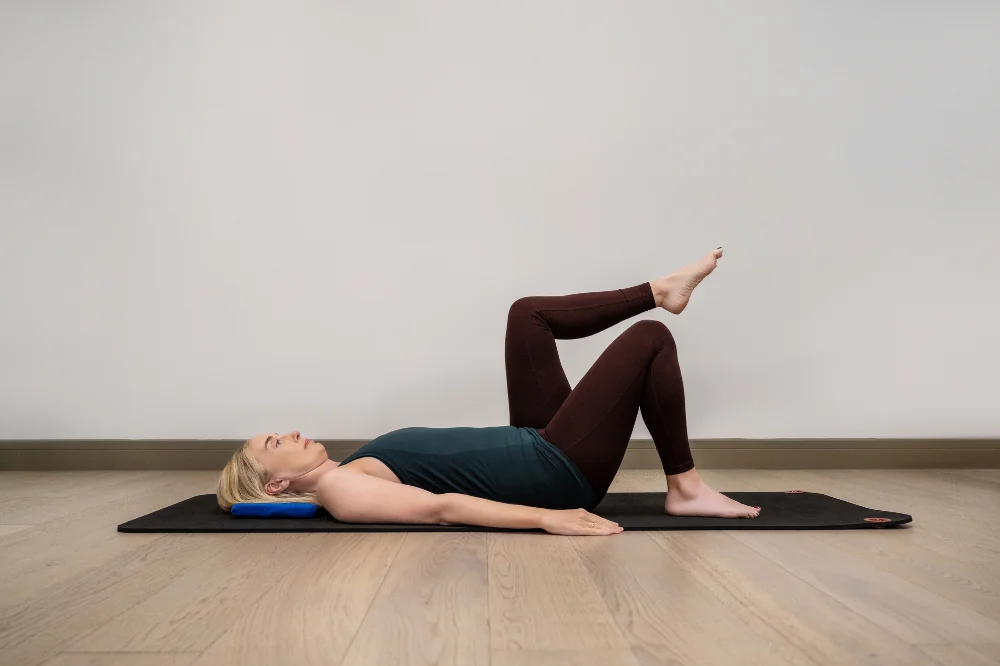
We have recently launched new technology within the Zebra Club platform. We are also expanding our content to include conditions that often co-occur with hypermobility, such as ME/CFS, POTS, and MCAS. Many of our members are bedbound due to severe fatigue. For them, we are creating short “micro-movement” videos that can be done in bed. Our goal is to make the IMM accessible to everyone.
Is there anything you would like to add that is helpful for people with hEDS and HSD?
I think it is really important that people have hope, because it can get very isolating and lonely when you live with these chronic conditions.
It doesn’t matter where someone is today; there is always something that can be done, even if it is just through breath or relaxation exercises. Your starting point might be different from someone else’s, and that is okay.
It really doesn’t matter how deconditioned you might feel or how long it has been since you have done exercise. Please don’t give up hope — wherever you are in your journey, there is always something that you can do.
Want to learn more about the IMM?
- What is the Integral Movement Method? — a full overview of the six components and the science behind them
- IMM Practitioner Directory — find a trained IMM professional near you
- The Zebra Club — Jeannie’s online movement platform for people with hEDS, HSD and related conditions
FAQ
What is the Integral Movement Method?
The Integral Movement Method (IMM) is a whole-person approach to movement developed by Jeannie Di Bon for people with hEDS, HSD and related conditions. It has six connected components — Breath, Relaxation, Proprioception, Stability, Balance, and Posture — each building on the last. Where most exercise programmes start with strength, the IMM starts with nervous system regulation.
Is Jeannie Di Bon a physical therapist?
Does the Integral Movement Method have scientific research behind it?
Why does the IMM start with breath rather than exercise?
What does “go low and go slow” mean in the IMM?
How can someone with hEDS or HSD access the Integral Movement Method?

Dr. Ellie van Setten is a board member of VED, the Dutch Ehlers-Danlos patient association, and a contributor to VED Magazine.

No Comments