
Estimated reading time: 8 minutesChronic pain is pain that lasts longer than 3 months (1). It can show up in many forms: pain from tissue damage, pain from nerve damage, or pain that lingers after everything has healed.
If you live with hypermobile Ehlers-Danlos Syndrome (hEDS) or hypermobility spectrum disorder (HSD), you have probably experienced more than one type, sometimes all at once.
Knowing which type or types you’re dealing with can help you make sense of symptoms that don’t always add up, and give you a clearer starting point for conversations with your care team.
The International Association for the Study of Pain defines pain as “an unpleasant sensory and emotional experience associated with, or resembling that associated with, actual or potential tissue damage”(1).
In the US, chronic pain affects at least 20%, with some estimates of up to 40% of the population. In the UK, one study estimates a pooled chronic pain prevalence rate of up to 43.5% (2).
In fact, The World Health Organization recognizes chronic pain as one of the most prevalent diseases in the world, with substantial disability and cost (3)
Chronic pain is one of the most frequent issues faced by people with EDS, including hEDS/HSD. It is included in the diagnostic criteria for hEDS (4), and pain from Ehlers-Danlos syndrome can affect nearly every part of the body, not just the joints that are hypermobile.
My pain experiences started when I was twelve years old with shoulder and low back pain. Chronic knee pain stopped my competitive running as a teenager. At the time, like many people, we were told it was growing pains, but now, with a greater understanding of hypermobility, it makes sense.
I now see many young people in my clinic with similar stories to mine. All have an EDS or HSD diagnosis and have found that chronic pain has begun to really interfere with their daily lives. Despite what we may be told, you are never too young to start experiencing chronic pain when you have a condition like EDS or HSD.
I became interested in chronic pain soon after my initial Pilates training in 2007. I undertook a comprehensive course to become a Low Back Pain practitioner and was first introduced to the concept of the biopsychosocial model back then.
Since then, I have worked with all types of chronic pain, learning more about neuroscience and how it has evolved over the decades. Since then, I have worked with all types of chronic pain, learning more about neuroscience and how it has evolved over the decades, including through my own MSc in Pain Management.
The types of pain are explored in the next section.
Key Takeaways
- Chronic pain in hEDS and HSD can involve more than one type at once: nociceptive, neuropathic, and nociplastic.
- Nociplastic pain is real and measurable, not imagined. It often develops after a real injury that primes the nervous system to react more strongly.
- The biopsychosocial model treats chronic pain as physical, emotional, and social all at once.
- Movement, pain education, and mindfulness are now recommended as first-line approaches, ahead of surgery or opioids.
- There’s no single fix. Managing chronic pain means combining different approaches personalized to you.
Updated September 2026
What are the types of chronic pain?
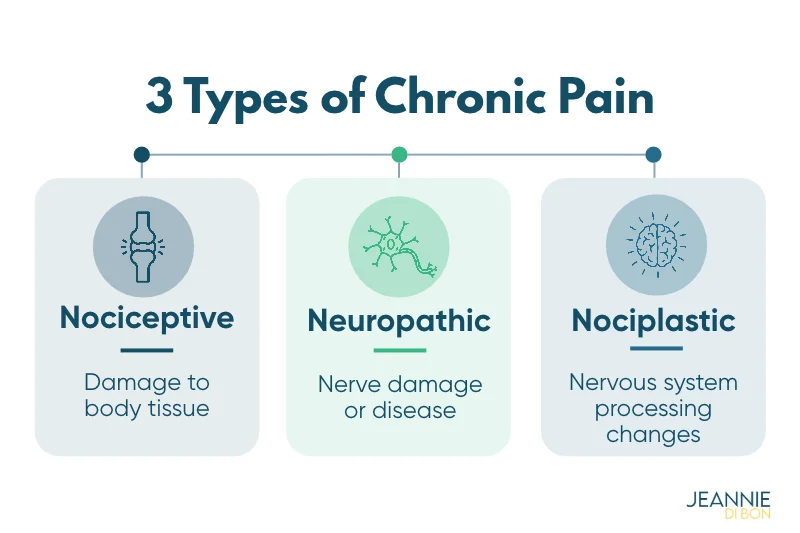
There are three main chronic pain types: nociceptive, neuropathic, and nociplastic (5). Many people with hEDS or HSD experience more than one at the same time.
Nociceptive pain
Nociceptive pain is caused by ‘issues in the tissues,’ a response to stimuli that is causing or could cause damage. This is the most common form of chronic pain. Some examples of this include arthritis, burns, muscle tears, muscle spasms, and visceral pathology like ulcers or kidney stones (2).
This is often acute and localized. Examples in EDS include things like dislocations and overstretching or tearing of ligaments and tendons (4).
Neuropathic pain
Neuropathic pain is caused by damage or disease of the nervous system that transmits sensation, rather than damage to the tissue itself. This can be from things like nerve or nerve root compressions, inflammatory diseases, chemotherapy, trauma, and more. This type of pain is often described as shooting, stabbing, and electrical (2)
Nociplastic pain
Nociplastic pain is an issue with the processing of pain signals, without evidence of tissue damage or pathology.
It is associated with conditions such as central sensitization, chronic immune system activation, the response to psychosocial stressors, and more. Examples include fibromyalgia, irritable bowel syndrome, and nonspecific back pain (2).
A person can have any combination of these types of pain. In EDS/HSD, there are multiple reasons we can experience each type of pain (4). For more on these types of pain, check out our guest blog series by The Zebra Club Scientific Advisor Leslie Russek. She delves into the 3 types of pain and how we can address them.
Central sensitization and nociplastic pain
Central sensitization is an amplification of neural signaling within the central nervous system that increases sensitivity to pain (3), a concept that has emerged from decades of neuroscience research.
While central sensitization is not included in the IASP definition of nociplastic pain, it is proposed to be the underlying mechanism (6). Dr. Leslie Russek describes it as the pain dial – like a volume control – being turned up.
Central sensitization is linked to a variety of alterations in the functioning of the central nervous system, including altered sensory processing in the brain and increased activity in areas that are involved in pain sensation (6).
At the cellular level, there are actual differences in protein expression in pain-signaling cells (4).
Altogether, this can result in an increased response to a variety of sensory inputs from tactile (touch) stimuli to non-musculoskeletal stimuli like sound, light, cold, stress, heat, and electricity (6).
It is proposed that “when this happens, pain outlives its usefulness as a warning system and becomes chronic and debilitating (4).
Central sensitization is found in a large number of chronic pain conditions like fibromyalgia, osteoarthritis, irritable bowel syndrome, low back pain, rheumatoid arthritis, and pain following cancer(6).
It is recognized that in the context of EDS, pain can gradually become more widespread and chronic. A few studies have linked this “chronification of generalized pain” in people with joint hypermobility syndrome or hEDS with central sensitization (4, 7, 8).
This shift toward widespread, chronic pain often begins with a real injury or period of acute pain, which can prime the nervous system to react more strongly to future signals (9).
This does not mean the pain is imagined. It reflects a genuine, measurable change in how the nervous system processes pain, even after the original injury has healed.
For more tips on managing nociplastic pain, check out this blog post with Dr. Russek.
What is the Biopsychosocial Model of pain?
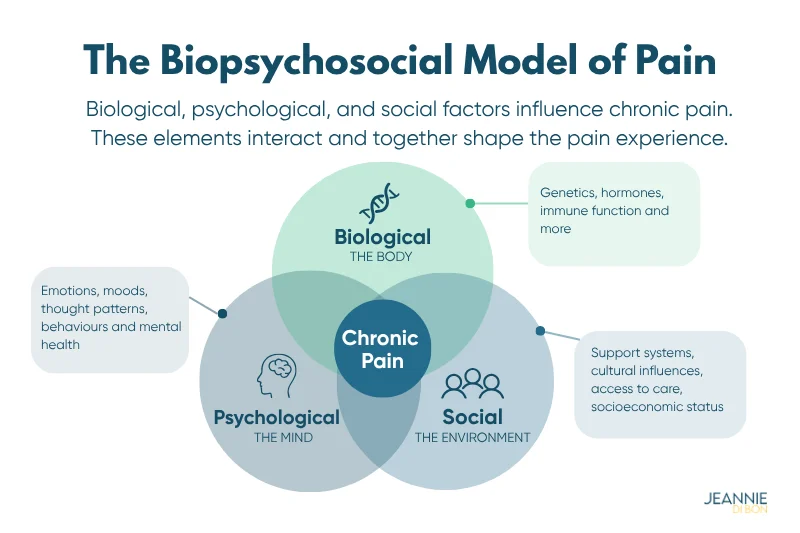
The biopsychosocial model of pain suggests that psychosocial factors play an important role in the persistence and shaping of chronic pain conditions.
It is a framework that understands health and illness through the complex interactions of biological, psychological, and social factors. It serves as a holistic approach to healthcare. It is a step forward from the old biomedical model that much of healthcare is based on.
- Biological factors could include genetic predispositions like EDS, immune function, and hormonal balance.
- Psychological factors include emotions and mood, behavioral patterns, cognitive processes, and our mental health. We may develop avoidant behaviors, anxiety, and adopt poor pain management strategies, which have been shown to be related to chronic pain (10).
- Social factors relate to cultural influences and beliefs, social support of family and friends, and socioeconomic status, such as access to medical care and education.
Mindfulness and chronic pain
Mindfulness is a mind-body practice of paying attention to the present moment, and research shows mindfulness-based approaches can help reduce pain intensity in people with hEDS specifically, not just chronic pain generally (11).
Psychological factors associated with chronic pain may also be predictive of pain persistence and disability (12), though this does not mean the pain is in your head; the psychological aspect of pain is simply an important piece of the picture.
For a full guide to building a meditation practice that works for a hypermobile body, including guidance for POTS, dysautonomia, and brain fog, see our complete guide to meditation for EDS and HSD.
In my Integral Movement Method approach, it was important that I focused on calming the nervous system before attempting to introduce exercise. The first two principles of the IMM are Breath and Relaxation, which help calm, reduce anxiety, and release muscular tension.
To understand why this nervous-system-first sequencing matters before adding movement, see our guide to mindful movement for hEDS and HSD.

How is chronic pain managed?
Managing chronic pain usually means combining several approaches, since chronic pain itself is multidimensional. Non-pharmacological treatments have recently been recommended as the first choice of treatment for chronic pain, as opposed to surgery or opioids (13). The NICE guidelines now recommend exercise and psychological therapies over pain medications.
If your pain comes in waves rather than staying constant, you may be experiencing what’s often called a flare. For more on identifying and managing flares, see our guide to understanding flare-ups in EDS.
The use of pain neuroscience education has been proven through research to be beneficial in the management of chronic pain.
This approach relates to both the biological and psychological processes involved in pain experiences, and it attempts to help patients reconsider their beliefs about pain and the tissue-damage relationship (14). The message that hurt does not always equal harm is a large part of pain education.
Pain neuroscience education combined with exercise therapy was shown to be the most effective form of intervention (15). It makes sense that we need to move our bodies safely with a greater understanding of the science behind our pain.
Much of this can start at home. Other management strategies could include:
- Physical therapy with a provider experienced in hypermobility, focused on joint stability and pacing
- Treatments from medical providers, such as steroid injections, may give some relief
- Cognitive Behavioral Therapy (CBT) and Dialectical Behavior Therapy (DBT) are two types of therapy that can help patients develop coping strategies and manage difficult emotions. Both have been studied in people with hEDS and HSD, though research so far is limited (16).
- Mindfulness and Relaxation techniques. We have a whole collection of audio meditations in The Zebra Club, including the Pain & Flare Recovery Structured Pathway, and a variety of gentle, relaxing classes designed to calm the nervous system.
- Biofeedback teaches patients to control physiological processes such as heart rate and muscle tension to reduce pain.
- Support groups can help provide emotional support and a sense of community.
- Occupational Therapy can be really useful to improve daily activities. Check out my interview with Jo Southall, OT.
- Diet and nutrition focused on anti-inflammatory foods may be helpful. Check my blog and video with Lorna Ryan about the EDS Diet.
- Establishing a regular sleep schedule that creates a restful environment can be helpful.
- Acupuncture, a traditional Chinese medicine, may help with pain conditions.
These are just some examples. Chronic pain is a huge topic, and effective pain management often requires a combination of different approaches, ideally personalized to your individual needs and circumstances.
Podcast: The Pain Speak with Dr. Deepak Ravindran
I recently joined Dr. Deepak Ravindran on his podcast, The Pain Speak, to talk openly about pain, hypermobility, and the whole-person approach behind the Integral Movement Method. Dr. Ravindran is a Consultant in Pain, MSK, and Lifestyle Medicine, and the author of The Pain Free Mindset.
His podcast explores the physical, emotional, and social sides of pain, along with neuroscience, neuroplasticity, and honest conversation about what genuinely helps.
Video: Pain Management Strategies
In this video, I discuss tools for chronic pain management with an expert patient, Bethany.
FAQ
What does chronic pain feel like?
Chronic pain feels different depending on its type. Neuropathic pain often feels like shooting, stabbing, or electrical sensations. Nociceptive pain is usually throbbing, aching, or pressure-like. Nociplastic pain tends to feel gnawing, aching, or sharp (2).
What happens to your body when you have chronic pain?
Chronic pain causes physiological, psychological, and social changes throughout the body. The nervous system can become more sensitive over time through central sensitization, amplifying pain signals (6). Neurochemical changes affecting serotonin and norepinephrine can also occur, which may impact mood and pain regulation.
What are the types of chronic pain?
There are three recognized types of chronic pain: nociceptive pain from tissue damage, neuropathic pain from nerve or nervous system issues, and nociplastic pain from altered pain processing (5). A person can experience more than one type at once.
What is considered chronic pain?
Pain is generally considered chronic when it lasts longer than three months, according to the International Association for the Study of Pain (1). It can involve tissue damage, nerve changes, or altered pain processing, and often continues after the original cause has healed.
What is an example of chronic pain?
Examples include arthritis, muscle tears, and dislocations, which are forms of nociceptive pain; nerve compression, a form of neuropathic pain; and fibromyalgia or irritable bowel syndrome, both linked to nociplastic pain (2). Chronic pain can involve one type or a combination of several.
Does Ehlers-Danlos syndrome count as chronic pain?
Ehlers-Danlos syndrome is a connective tissue condition, not a type of pain itself, but chronic pain is one of its most frequently reported features and is included in the diagnostic criteria for hEDS (4).
What can I do at home to manage chronic pain?
Home-based options include mindfulness and relaxation techniques, a regular sleep schedule, and paying attention to diet and nutrition. These sit alongside professional support like physical therapy, occupational therapy, and psychological therapies such as CBT and DBT.

Jeannie Di Bon is a movement therapist, educator and author specializing in hypermobility, Ehlers-Danlos Syndrome and chronic pain. She is the founder of The Zebra Club app and the creator of the Integral Movement Method.
Literature Review and Research by Catherine Nation PhD, MS
Works Cited
- https://www.iasp-pain.org/advocacy/definitions-of-chronic-pain-syndromes/
- Cohen et al. (2021) Chronic pain: an update on burden, best practices, and new advances. Lancet.
- Nijs et al. (2021) Central sensitisation in chronic pain conditions: latest discoveries and their potential for precision medicine. Lancet Rheumatology.
- Malfait et al. (2021) Pain in the Ehlers–Danlos syndromes: Mechanisms, models,and challenges. American Journal of Medical Genetics.
- Li et al. (2025) Molecular Mechanisms of Chronic Pain and Therapeutic Interventions. MedComm. 6(8):e70325.
- Nijs et al. (2021) Nociplastic Pain Criteria or Recognition of Central Sensitization? Pain Phenotyping in the Past, Present and Future. Journal of Clinical Medicine.
- Leone et al. (2020) Pain due to Ehlers-Danlos Syndrome Is Associated with Deficit of the Endogenous Pain Inhibitory Control. Pain Medicine.
- De Wandele et al. (2022). Exploring the pain mechanisms in hypermobile Ehlers-Danlos syndrome: a case-control study. European Journal of Pain Medicine.
- Smith, A.F. et al. (2025) Sex differences in the transition to chronic pain. Journal of Clinical Investigation. 135(11):e191931.
- Paschali, M. et al. (2023) Mindfulness-based Interventions for Chronic Low Back Pain. Clinical Journal of Pain.
- Lattimore & Harrison (2023) Pilot study of an online-delivered mindfulness meditation in Ehlers-Danlos syndrome (hEDS): effect on quality-of-life and participant lived experience. Disability and Rehabilitation.
- Petrucci, G. et al. (2021) Psychological Approaches for the Integrative Care of Chronic Low Back Pain: A Systematic Review and Metanalysis. International Journal of Environmental Research and Public Health.
- George, S. Z. et al.(2021) Interventions for the Management of Acute and Chronic Low Back Pain: Revision 2021: Clinical Practice Guidelines Linked to the International Classification of Functioning, Disability and Health From the Academy of Orthopaedic Physical Therapy of the American Physical Therapy Association. Journal of Orthopaedic & Sports Physical Therapy
- Bonatesta L, et al. (2022) Pain Science Education Plus Exercise Therapy in Chronic Nonspecific Spinal Pain: A Systematic Review and Meta-analyses of Randomized Clinical Trials. Journal of Pain.
- Ma et al. (2023) A systematic review and meta-analysis of pain neuroscience education for chronic low back pain: short-term outcomes of pain and disability.Physiotherapy Theory and Practice
- Song et al. (2023) Psychological interventions for individuals with Ehlers-Danlos syndrome and hypermobility spectrum disorder: a scoping review. Orphanet Journal of Rare Diseases. 18:254.

No Comments