Estimated reading time: 10 minutesOne of the questions I hear most often from clients and members of The Zebra Club is whether massage is safe for symptomatic hypermobility, hEDS, and HSD
The good news is that it is, and when approached thoughtfully, it can be a very beneficial tool for us.
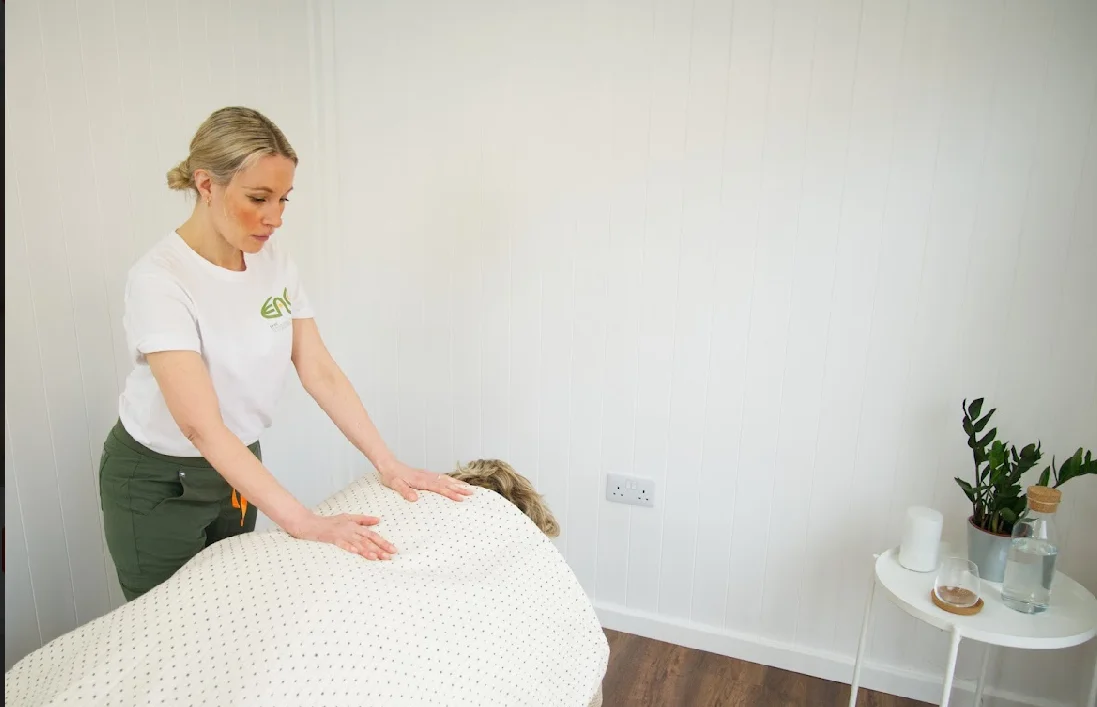
I am delighted to introduce Jessica Janneman, an Advanced Clinical Massage Therapist based in Birmingham who lives with hEDS herself, and who has recently completed a research study with the Jing Institute evaluating the effectiveness of clinical massage for people with EDS/HSD.
Jessica is also currently completing the Integral Movement Method training, which means this guide brings together everything I believe in: the right touch, combined with the right movement
Personally, I use clinical massage alongside my daily IMM to keep my body hydrated. Plus, it’s a lovely way to relax those tired muscles.
Everything below is written in Jessica’s words, drawing on her clinical experience unless otherwise noted.
Key Takeaways
- Massage is safe. For most people with hEDS and HSD, massage is not only safe but can be one of the most beneficial complementary therapies available.
- The relationship matters as much as the technique. Feeling safe, listened to, and believed by your therapist directly affects how effective the treatment can be.
- Deep tissue massage is not for everyone. It works well for some people but causes flares in others. Introduce it gradually and communicate closely with your therapist throughout.
- Massage works best alongside movement. Combined with breathwork and body awareness practice, it can create long-term change rather than temporary relief.
Why Massage Matters for People Living with hEDS and HSD
The benefits of therapeutic touch have been employed since the beginning of time. When we see someone is sad we offer them a hug; a child falls over, we rub their knee better; when someone needs support, we hold their hand…instinctively, we know the power that safe touch can have, and this should be no different for people living with hEDS/HSD.
But it can sometimes be hard when we’re in pain, our bodies feel unstable, or our minds feel overloaded, to know whether seeking touch through massage therapy can be of benefit or should be avoided.
Equally, it can be difficult to know who to trust and what to tell them.
Massage should be accessible to everyone. Here are some pointers as to how to get the most out of massage when you’re living with symptomatic hypermobility.
Benefits of massage for EDS & Hypermobility
Massage can do a lot to support people living with hEDS and HSD, and the research supports this. From reducing pain and improving how your body senses itself in space, to supporting sleep and settling the nervous system, the benefits go well beyond simple relaxation.
- The sensory input from touch can reduce the sensitivity of pain signalling nerves (nociceptors) and influence how the brain and spinal cord interpret those signals (neuromodulation) (1), therefore reducing pain.
- Massage can support body awareness by improving proprioceptive input – your body’s ability to sense where it is in space (2).
- Massage acts as a catalyst to help people return to movement – if massage can help reduce pain, muscle guarding, and fear around movement, then exercise and rehabilitation may seem more possible (3).
- Safe touch is soothing; it allows people to feel nurtured and cared for and can reduce central sensitisation (4)
- Massage can help with sleep, which we know can be so difficult for many people living with hEDS/HSD. It can help with falling asleep, quality of sleep, and length of sleep (5)
- Massage can reduce stress and anxiety through calming your nervous system (6).
- Massage is non -medicalised care and can offer a break from living with a chronic condition. You need to tell your therapist you have ESD/HSD, of course, but that does not have to be the focus of the treatment (unless your aim is help with the symptoms of the condition) – you’re entitled to switch off and go somewhere else, just like anyone else is!
By Seb Bustamante for Jessica Janneman, Ease Therapies
Which Types of Massage Are Safe for EDS?
Most types of gentle massage are safe for people with hEDS and HSD, and what works best is highly individual.
All bodies are different! There’s not one type of massage that will suit all people with hEDS/HSD. This is the same with all massage – we all have a personal preference, and that is as important as anything – massage should be a safe, consensual interaction, with the client at the centre rather than the ego of a practitioner insisting on doing what they think is best!
Arguably, the most important thing is the Therapeutic Alliance (ie. the relationship you have with your therapist). This is the case for all therapeutic interventions, but we know it is of particular importance for people living with hEDS/HSD (7).
If you don’t feel that you are safe, listened to, and believed, then this affects the efficacy of the treatment.
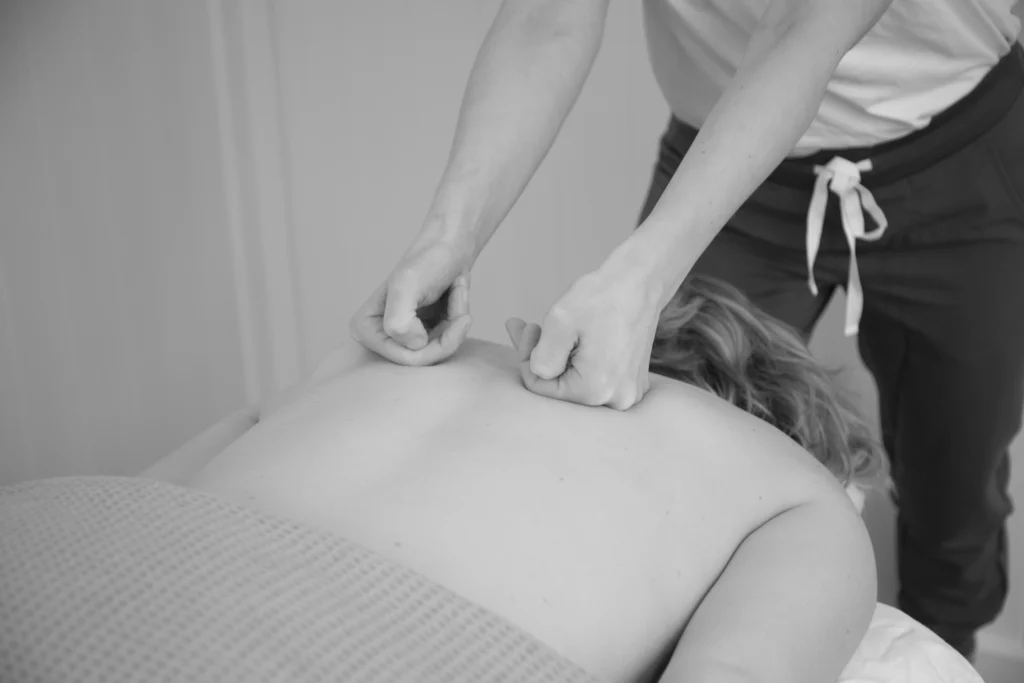
We know from the research of Tina Wang and Antonio Stecco that the inter- fascial glide in people with hEDS/HSD is impaired, leading to restriction in movement, chronic pain and instability (8) and so it is perhaps no wonder that Myofascial Release is often suggested for this community as being beneficial (9)though caution should be taken as the tissue really can stretch and so it’s important that the practitioner keeps this within a ‘safe’ range.
There’s evidence of the use of Trigger Point work being effective in hEDS/HSD management(10) in reducing pain. This is thought to be most beneficial when combined with other techniques, such as in the Jing Method™ (4), which combines heat, myofascial release, trigger point work, acupressure, stretching, and the teaching of self-care.
Trigger point work should also be introduced gradually, with good communication between client and therapist to avoid any flare in condition.
Some people will find Swedish massage soothing and calming, while others will find its gentleness irritating, or others the continuous touch overstimulating. Some people find reflexology calms their whole body very quickly, other people hate having their feet touched!
Massage is made safe through the relationship with the therapist, their understanding of the condition and good communication. If at any time it doesn’t feel right, physically, emotionally, or spiritually, it’s absolutely right to ask them to stop (you don’t have to give a reason), and they must respect that without question.
Tina Wang offers a guide to different types of massage and their benefits pp.218-219 (11)
Deep Tissue Massage and EDS – A note
Deep tissue massage can be beneficial for some people with hEDS, but it causes significant flares for others. Understanding why can help you decide what’s right for your body
Some people love a deep tissue massage, it feels good in their body, and they don’t get any side effects. But for some people, it feels too much or good in the moment, but causes an increase in pain or a flare in symptoms after.
There’s very little evidence around deep tissue massage and hEDS, but as we know, tissue can be weaker and skin more fragile in this community; this needs to be a consideration when thinking about deep tissue work.
We also know that a mast cell response can be activated in some people from touch itself, and anecdotally, this is sometimes seen following a deep tissue massage, perhaps in a similar way to the occurrence of a flare after exercise.
The tricky thing is that because the big muscles (such as your traps, glutes…) tend to be working really hard to stabilize your joints, these can feel super ‘tight’ to a massage therapist whose instinct will usually be to try and free these up by using deeper techniques.
Massage was once thought to be a ‘no pain, no gain’ experience, but this is not the case. We now understand that adding more pain to a body that is already experiencing pain will only cause the brain to try to protect you further by sending out more pain signals, in turn causing more pain and the muscles to become tighter.
Effective massage is always a balance of your preference, the therapist’s knowledge and what the evidence tells us, so it’s absolutely fine if you enjoy a deeper massage but perhaps introducing it gradually (maybe combined with gentler approaches rather than a whole deep tissue treatment), particularly if you’re working with a new therapist might give you a better sense of how beneficial it is and can set a safe ‘benchmark’ for you to work from.
Can Massage Cause a Subluxation or Dislocation in EDS?
Good communication with your therapist means this is very unlikely to happen — and there are some simple steps worth building in from the start.
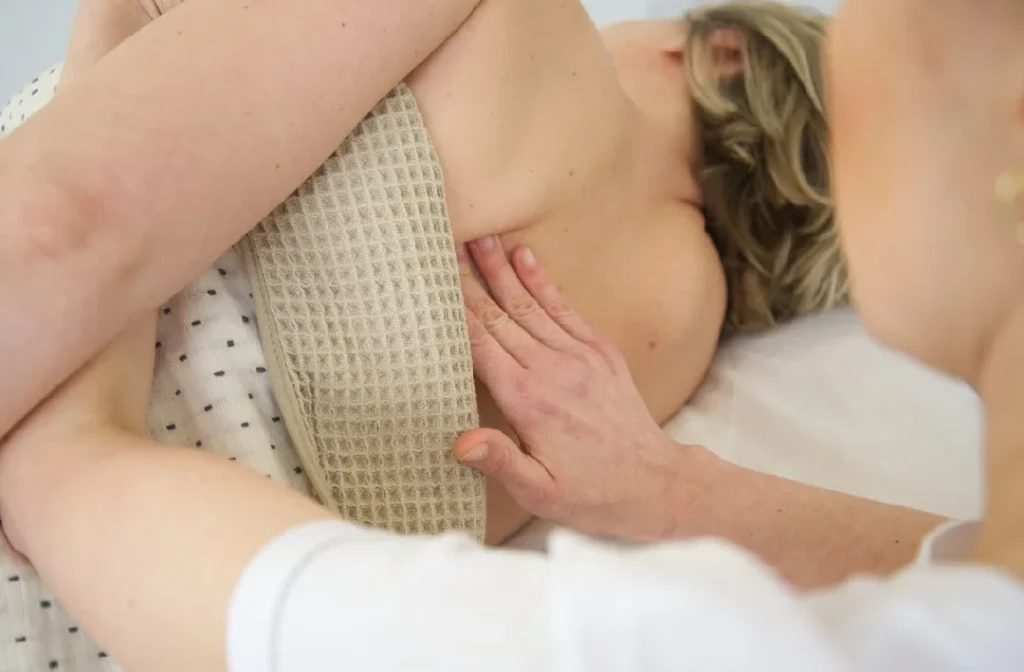
They should know their anatomy well enough to be careful with positioning. Bolsters/cushions, etc., can be used to help you feel safe and supported throughout the treatment.
If you feel anxious about a particular joint, especially when you first start working with a therapist, you can ask them to avoid that joint until you’ve learned more about each other and how your body responds to treatments.
It’s good to be cautious initially, because the connective tissue is more fragile; too much input (from deep tissue work or trigger point techniques for instance) can lead to agitation within a joint or the fascia (12). Some mobilization techniques may also feel risky initially – this does not mean to say they may not be of benefit but again, maybe something to build up to over time, if appropriate.
By Seb Bustamante for Jessica Janneman, Ease Therapies
What to Tell Your Massage Therapist
Tell your therapist about how hEDS and HSD affect you day to day.
It’s not your job to have to educate a therapist on the condition overall (which is, of course, exhausting in itself) – they can go off and do their own research, but an indication of how it affects you on a daily basis (including the fact that this changes) is super helpful.
Even if the therapist hasn’t treated someone with hEDS before, they will probably have treated some of the symptoms, and so this will help them form a plan.
It is likely that within this you would mention some of the comorbidities such as dysautonomia and MCAS, neurodivergence, and any mental health conditions. This will help them personalize the treatment, but also really indicate how systemic it is and not ‘only’ about the joints.
If you’ve had massages/manual therapy before, it can be useful to tell your therapist about how you reacted (positively or negatively), which might include things to do with pain or fatigue, but also skin sensitivity, products, and positioning, along with things you really like (temperature, smells, etc.).
It is important to let them know if you have any upper cervical instability (or think you might have) – manual therapy and massage can be really beneficial, but need to be used with caution and in some cases, and if the therapist is unsure, completely avoided (13).
Massage therapists want to help you, and so will be really receptive to anything you need to make it a positive experience – it’s completely valid to say you might need a break to go to the bathroom or longer to get up at the end because you’re dizzy.
Equally, if a position isn’t comfortable for you (even if it was at the start), there’s always a different position you can try or cushions that can help, and your therapists should have all these tools in their kit!
Self-Massage at Home — Is It Safe?
Yes, gentle self-massage at home can be safe and helpful for people with hEDS and HSD, with a few key principles to keep in mind.
Each of us is different, and self-massage comes in lots of different forms; what may feel ‘safe’ and helpful for one person may not for another, and this may also change day to day.
If you want to try some self-massage with massage guns, foam rollers, or massage balls, stick with these principles:
- Try it just a little at first (you can build up to using it more if it turns out to be helpful) and notice how you feel over the 24/48 hours after.
- Be careful with pressure – you may have skin that breaks or bruises easily, so be careful how much you’re pressing into the tissue (forget ‘no pain, no gain’ – you should only apply pressure that feels tolerable).
- Think about the environment: perhaps play some relaxing music, light a lovely smelling candle, and make yourself comfy.
- Self-massage combines really nicely with breathwork and meditation, so you could make this a little routine – anything you can do to create a relaxing, calm environment for yourself will help the massage to be more effective.
How often should someone with EDS get a massage?
How often you get a massage is really personal! Frequency depends entirely on you and what your aims are.
Massage works best when it fits into your life easily and feels like a positive thing, so for some people, this will be determined by cost, travel, and how it makes them feel afterwards.
Think about where it fits within your day and week to get the best of it (are you squeezing it in between other things, or can you go and take things easily afterwards? Is it helpful to do it before bed to help with sleep? Do you have to sit in a car for ages afterwards, and then everything becomes stiff?)
If you’re neurodivergent or managing MCAS, you may find really regular treatments over-stimulating, and so this is also something to consider.
Talk to your therapist about it so you can make a plan. If you can’t come very often, they might be able to give you ideas about how you can replicate the work at home (self-massage, breathwork, etc.) or even work with you online, combined with some self-massage.
By Seb Bustamante for Jessica Janneman, Ease Therapies
The Movement–Massage Connection
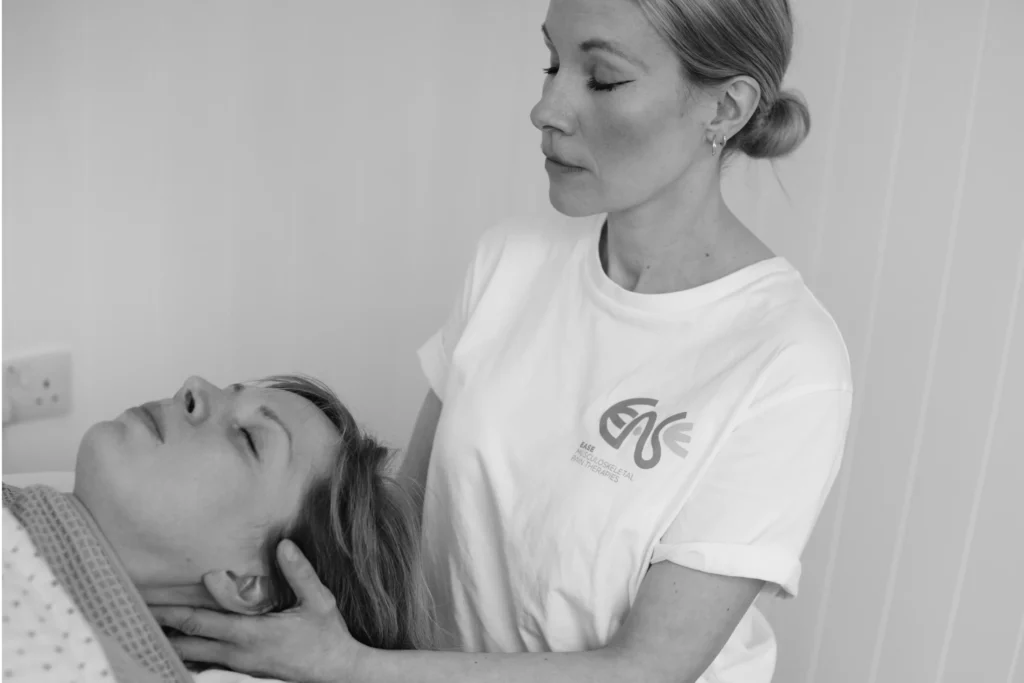
Massage and movement work well together. It can calm the nervous system, reduce pain and guarding, and make the body feel ‘safe’ to explore movement.
Depending on the practitioner’s training, in treatment, you might explore a range safely through mobilization work. They may also be trained in strengthening techniques such as PNF and isometric exercise, which have been shown to be beneficial in strengthening joints (13). By exploring these movements together, a sense of safety is created, and the possibility of using these as rehab at home is promoted.
Similarly, breathwork and relaxation can be integrated into a massage treatment, which, as we know, is the cornerstone of the Integral Movement Method (IMM) and essential before increasing resistance or load.
Even if your therapist doesn’t have these specific skills, the improved fascial glide, reduction in pain, and sense of relaxation that may come from a massage can help people access self-guided movement like the Zebra Club, rehab, or more traditional exercise more easily and with great benefit.
Seeing a therapist regularly can also act as a chance to check in and reflect on progress – they can often see the change even if you can’t and help cheer you on.
This combination of massage and movement is how massage can be utilized to create long-term change- it can be a really powerful part of that.
FAQ
Is massage safe for Ehlers-Danlos syndrome?
Yes, and not just safe: massage can be super beneficial for people with hEDS and HSD when the therapist makes modifications to suit your body. One study found 84% of participants with hEDS rated it as the most beneficial complementary modality.[14] It’s all about communication and finding the right person to work with.
What type of massage is best for EDS and hypermobility?
There isn’t one type that suits everyone, and personal preference matters as much as technique. What feels wonderful for one person may feel overstimulating for another. Myofascial release is often recommended as research shows inter-fascial glide is impaired in hEDS and HSD,[8,9] but arguably the most important factor is the therapeutic relationship with your therapist, feeling safe, listened to, and believed.[7]
Why does deep tissue massage make EDS worse?
Deep tissue massage works well for some people with hEDS and HSD with no side effects, but for others it causes a significant flare afterwards. The big muscles work hard to stabilise hypermobile joints and feel tight, which leads therapists to go deeper, but tissue is more fragile in this community and in some people, deep touch can trigger a mast cell response.
Can massage cause a subluxation or dislocation in EDS?
With an aware therapist and good communication, this is very unlikely, and there are simple steps that help. Bolsters and cushions keep you supported throughout, and if you’re anxious about a particular joint, you can ask your therapist to avoid it until you’ve built up trust and have a better sense of how your body responds to treatment.
How often should someone with EDS get a massage?
How often you get a massage is really personal and depends on your body, your aims, and practical things like cost and how you feel afterwards. If you’re neurodivergent or managing MCAS, very frequent sessions may feel overstimulating, so talk to your therapist and make a plan that fits your life.
What should I tell my massage therapist about EDS?
Tell them how hEDS and HSD affect you day to day, including comorbidities, past reactions to treatment, and any joints that need particular care, rather than feeling you have to explain the full condition. If you have any upper cranial instability, always mention this as it requires specific caution.[13]

Jessica Janneman is an Advanced Clinical Massage Therapist. Her business Ease Therapies is based in Birmingham, UK. She uses massage therapy to help people living with complex chronic pain conditions. Diagnosed with hEDS, she brings her lived experience to her work and has a special interest in symptomatic hypermobility. She has recently completed a research study with the Jing Institute of Massage and Complementary Medicine evaluating the effectiveness of the Jing Method™ of Clinical Massage on the wellbeing of adults diagnosed with EDS/HSD. She is currently completing Jeannie’s IMM, to combine movement with massage for her clients. Originally trained as an actor at The Guildhall School of Music and Drama, Jessica brings these foundations in breath, movement and communication to her clinical massage work.
- Savallampi et al. (2023) Social Touch Reduces Pain Perception—An fMRI Study of Cortical Mechanisms. Brain Sciences.
- Danner et al.(2025). Massage and exercise increase body awareness in healthy adults: A single blinded randomized controlled trial. Journal of Bodywork and Movement Therapy.
- Chuchin & Ornstein (2024) Fear avoidance, fear of falling, and pain disability in hypermobile Ehlers-Danlos syndrome and hypermobility spectrum disorders. Disability and Rehabilitation.
- Fairweather R, Mari MS (2015). Massage Fusion. East Lothian: Handspring.
- Ntoumas et al. (2025). The Impact of Relaxation Massage Prior to Bedtime on Sleep Quality and Quantity in People with Symptoms of Chronic Insomnia: A Home-Based Sleep Study. Healthcare.
- Field T. (2014). Massage therapy research review. Vol. 20, Complementary Therapies in Clinical Practice.
- Guedry et al. (2023) Patient experience of chronic illness care and complementary integrative health use: a cross-sectional study of patients with hypermobility spectrum disorders (HSD) and Ehlers–Danlos syndromes (EDS). Disability and Rehabilitation
- Wang TJ, Stecco A.(2021) Fascial thickness and stiffness in hypermobile Ehlers-Danlos syndrome. Am J Med Genet Part C Semin Med Genet.
- Song et al. (2020) Ehlers-Danlos Syndrome: An Analysis of the Current Treatment Options. Pain Physician.
- Russek et al. (2019) Recognizing and Effectively Managing Hypermobility-Related Conditions.Physical Therapy
- Wang TJ. Fascia and Hypermobility Disorders (2026). London: Handspring.
- Russek et al. (2023). Presentation and physical therapy management of upper cervical instability in patients with symptomatic generalized joint hypermobility: International expert consensus recommendations. Frontiers in Medicine.
- Şlicaru & Ionela (2023). The Importance of Physical Therapy Intervention in Improving the Quality of Life in a Patient with Ehlers-Danlos Syndrome. Gymnasium.
- Doyle & Halverson (2022)Use of complementary and alternative medicine by patients with hypermobile Ehlers–Danlos Syndrome: A qualitative study. Frontiers in Medicine.

2 Comments
Christy - 18th April 2026
I have hEDS and I get a medical massage once a week. My therapist is a massage therapist who is also a physical therapist. We work closely together, and my best massages use a form of biofeedback. The therapist tells me or touches the muscle that needs to relax and I do visual and breathing exercises focused on that muscle. Once the muscle starts to respond, the therapist communicates to me what they’re feeling (provides feedback about my biology) and therefore I learn which visual and breathing techniques work best for each area of my body. With repetition, this mind body connection is something I can call upon when I’m not on the table. Thus, the benefits of my massage can last well beyond the first hour.
Jeannie Di Bon - 22nd April 2026
That sounds great – glad that is working for you.